

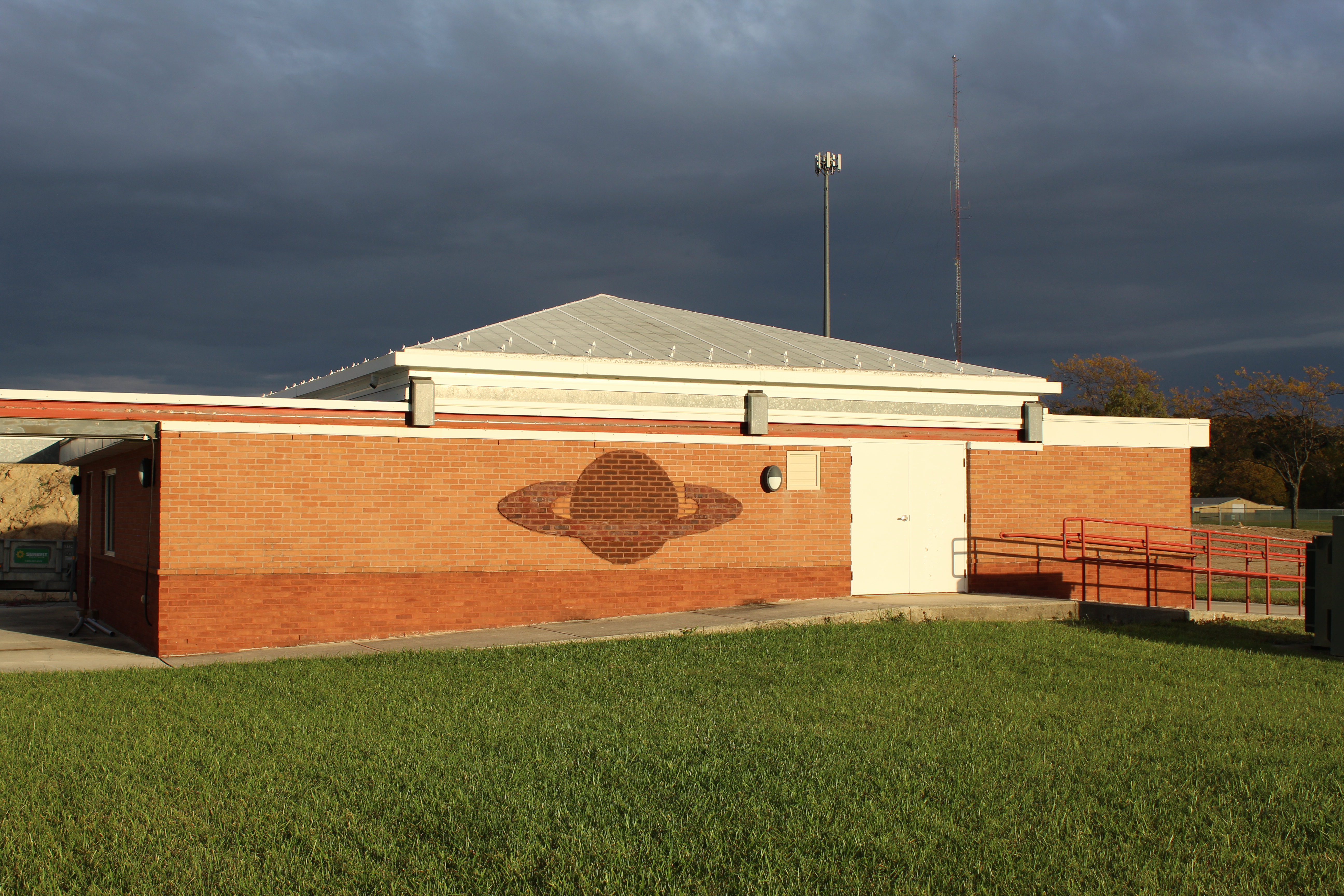

The Ohio Northern University (ONU) Observatory continues its long-standing mission, as listed on its website, to “educate and inspire the students of Ohio Northern University, as well as the surrounding community, about the exciting and rapidly evolving science of astronomy.” Since opening its doors in 2010, the on-campus observatory has provided opportunities to engage with hands-on learning and develop a better understanding of the night sky. While it is regularly accessible to ONU students and staff, Observatory Director Dr. Jason Pinkney has organized two public events during the Fall 2026 semester.
The ONU Observatory is located adjacent to the varsity baseball field on campus. Each public event will run from 8:00 p.m. to 10:00 p.m., allowing visitors to come and go when it is convenient for them. Because outdoor viewing events are dependent on weather and cloud cover, visitors are encouraged to check the official observatory website for schedule updates, detailed directions, event status, and visitor guidelines.
Both upcoming public events highlight annual meteor showers, the first of which is the Taurid Meteor Shower on Friday, November 6. This event is characterized by colorful, slow moving fireballs that are visible near the constellation Taurid. The other is the Geminid Meteor Shower on Friday, December 11, which is known for being one of the most reliable and populated annual showers. This will feature bright, fast moving, meteors that appear around the constellation Gemini.
“It is a notable meteor shower because the source of the meteors is an object called 3200 Phaethon, which is more of an asteroid than a comet,” notes Pinkney.
The ONU Observatory provides a large range of viewing equipment, and is specifically set up for larger groups to have an enjoyable viewing experience.
“We have a roll-off roof which gives you a wide view of almost the entire sky (unlike typical domed observatories),” explains Pinkney. “We also have a variety of telescopes from 12-inch Schmidt-Cassegrain telescopes down to binoculars.”
Inside the observatory are TVs that can display telescope images, which allows multiple guests to view the same objects at once. There are a total of three telescopes, which will all be positioned to observe different points in the sky. Visitors will have the opportunity to view multiple different planets and stars, as well as the meteors.
“Personally, I think Saturn is one of the coolest things to see through the observatory telescopes. Seeing the rings with your own eyes is a lot different than seeing them in a picture. The Moon is also really impressive because of how much detail you can see in the craters,” says Patrick Bak, president of the ONU Astronomy Club.
For students looking to explore astronomy beyond public viewing nights, the ONU Astronomy Club is always looking for new members.
“The Astronomy Club is mainly a way for students interested in astronomy to get involved, use the observatory, and meet other students with the same interest,” explains Bak.
They meet biweekly on Wednesdays at 9 p.m. to discuss recent astronomical discoveries, news, and skywatching techniques.