


This year, the UN has officially acknowledged that humanity will overshoot the 1.5 degree Celsius limit in global warming set by the Paris Climate Agreement, which was intended to mitigate the worst effects of climate change, and reduce the chance of extreme effects by the year 2100. This turning point announcement came ahead of the 30th annual Convention of the Parties (UN Climate Change Conference/COP30) that was held in Belém, Brazil, the city deemed the gateway of the Amazon rainforest.
It’s important to remember that although the Paris Climate Agreement goal is intended to keep warming under 1.5 degrees by the year 2100, and many of us reading this article right now may not see that year, worsening impacts of climate change will continue throughout our lifetimes, and will indefinitely impact our younger siblings, our children, and our grandchildren.
The most recent Nationally Determined Contributions, or NDCs, submitted by countries at the COP30 show that the most likely warming scenario, even if countries meet these targets, is still around 2.6 degrees Celsius. In a world already experiencing the effects of 1.5 degrees of warming long before 2100, alongside worsening natural disasters and climate-related events, 2.6 would be catastrophic.
But with this goal being shot past, does it mean the hope for our futures is pointless?
I have to be honest, I feel like my future has been stolen from me. I am angry about it, and I don’t quite know what to do with this anger to be in any way productive. However, one thing that I refuse to do is give up.
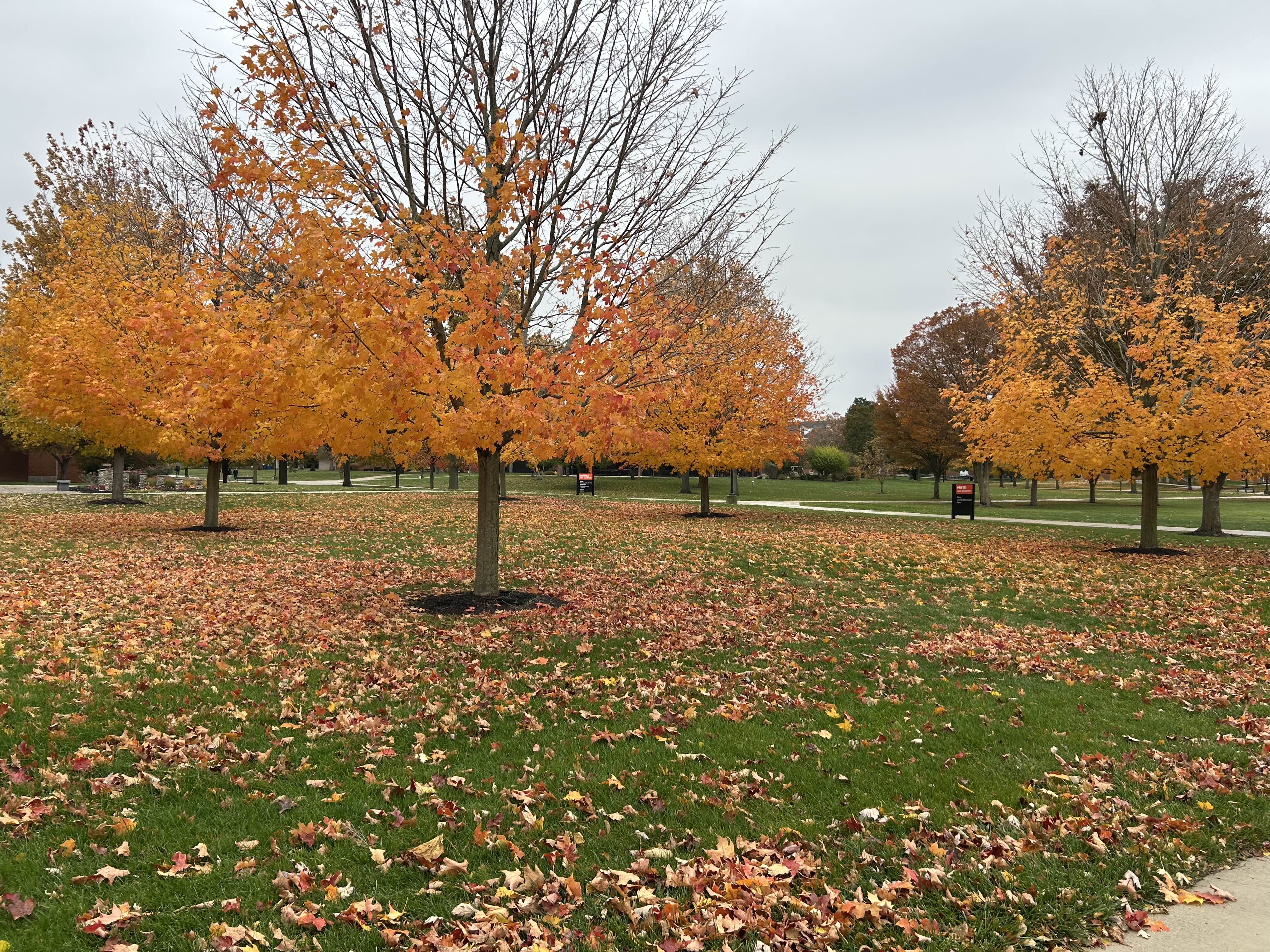
It’s undeniable, even to people who refuse to believe that human activity is the cause, that our planet has warmed up. Our Ohio autumns feel like spring, spring feels like summer by the middle of May, and summer feels like a whole new experience that lasts into October. This should not be happening.
Our generation is inheriting this crisis that, not only did we have no real part in creating, but we are also looked at as too young to be knowledgeable about, even though the oldest of us are in their 30s already.
The global community has made progress on our climate change outlook, but more drastic measures need to be taken. While we are no longer estimated to reach the devastating 4 degrees Celsius increase by 2100 that was believed to be the case when the Paris Climate Agreement was reached in 2015, the outlook of 2.6 degrees of warming should not be celebrated as a success until we set targets that can get well below it.
There is still progress to be made, but we have to push for it.
Join organizations at a local level, push for local and county-centered change.
Volunteer to help with rewilding projects and learn about your local biome.
Plant a garden full of open-pollinated and heirloom plants and collect the seeds at the end of the growing season to reuse next year!
You can even start by urging Ohio Northern to make greater strides toward sustainability during your time here as a student. You don’t have to be an environmentalist or an environmental and field biology major to care about our natural world.
As students here, we are incredibly lucky to have such a naturally beautiful campus. Although some people complain about the lack of parking, I appreciate the fact that our campus isn’t covered in asphalt that raises the surface temperature of the area during the summer. Instead, there’s grass and trees just about everywhere you look.

Our university also utilizes solar energy to provide electricity for, at least, parts of our campus through a contract with AEP.
Unfortunately, ONU also recently partnered with oil and gas company, Cenovus Energy, and received a $400,000 donation from them toward our engineering program. While the donation is kind and supports future innovators, accepting money from oil and gas companies— an industry that has known for 50 years that climate change would warm our environment and create instability— defeats the purpose of any sustainability efforts the university puts forth.
If you’re looking for somewhere to start, demand that ONU divest from fossil fuel industry support.
Small, individual actions do matter. Oftentimes when it comes to the climate, we think to ourselves that I am just one person, what will it matter if I, alone, just change my actions? But if a million people make a small change in their daily lives, it starts to make a difference.
This fall, I planted native wildflower seeds to support the pollinators for a garden my family and I will be planting next spring and summer. I’ve made it a goal to buy less, reuse more, and think about the choices I’m making with the money I’m spending. The luxury of buying without thinking about it will not last forever.
We have to be the revolution on this one. We don’t have another option, so losing hope will get us nowhere.
I plead with you, as a fellow student coming into a scary and uncertain world, to not be paralyzed by this, and rather use it as an opportunity for action. Take hold of what you can control, rally people around the cause, and make the progress we want to see happen.
Our species’ survival, and millions of other species on this planet’s survival, depends on it.