

This article was written by Michael Kirchner and Carys Williams.
When crossing the tundra, many follow the beaten path. Others create their own paths. Gradually, as the needs and desires of people change, the paved paths must change to accommodate those needs. This forms a “desire path.” Ohio Northern has experienced this process throughout its history, is experiencing this process currently, and will experience this process in the future.
Zooming Out
Desire paths are paths that are “created by usage” in which pedestrians create new paths to travel more efficiently than existing paths allow. These often disregard paths designed by architects or other designers of sidewalks. In recent times, some architects have used desire paths to their own advantage.
Desire Paths on College Campuses
One such way architects have used these desire paths to their advantage is on college campuses. For example, Michigan State University created new buildings then let students create their own paths around them. They did this by neglecting to even pave paths at one point, and just creating paths where the students chose to walk.
Progression of Paved Desire Paths at Ohio Northern
Originally, ONU’s walkways were designed to be aesthetically pleasing. As ONU built new buildings, however, students carved their own desire paths across the grass, creating more efficient routes that better matched their actual walking patterns. This created the impetus for the university to pursue new walking paths. Over time, the university recognized the informal pathways and began paving them, incorporating the student-created routes into the official campus infrastructure. We met with ONU archivist Matt Francis to learn about the history of the walkways on campus and about how desire paths may have shaped the tundra as we know it today.
One Northern Review article from 1974 shows the modern layout of campus. According to the article, “a new series of sidewalks connecting King-Horn Center with the residence halls is nearly completed…George Hassell, the then Vice President for Financial Affairs, noted that the walks have been planned to suit people’s movement between buildings. He added that ‘professional engineers were called in’ to determine the best pattern and hoped that everyone would be happy with the new walks.” This Northern Review article and more are available at the archives in the Heterick Memorial Library, and Francis invites students to visit the archives and learn more about ONU’s history. The following images show the evolution of campus and its walkways, and are provided courtesy of Francis and the Ohio Northern Archives.

This excerpt of a Northern Review paper, from September 23, 1974, tells the story of the then new pathways on campus (ONU Archives/File)

This aerial photo from 1968 reveals an early layout of Ohio Northern’s walkways. The student-worn paths are visible in the grass, prompting the university to reevaluate the campus’ walkway architecture. (ONU Archives/File)

This map of campus from the early 1970s depicts sketches of the tundra and its pathways (ONU Archives/File)

This 1989 campus plan shows how Ohio Northern views its pathways as central to the design of campus, with the goal of keeping most of the campus within a 5-minute walk from the center of campus. (ONU Archives/File)
Desire Paths now
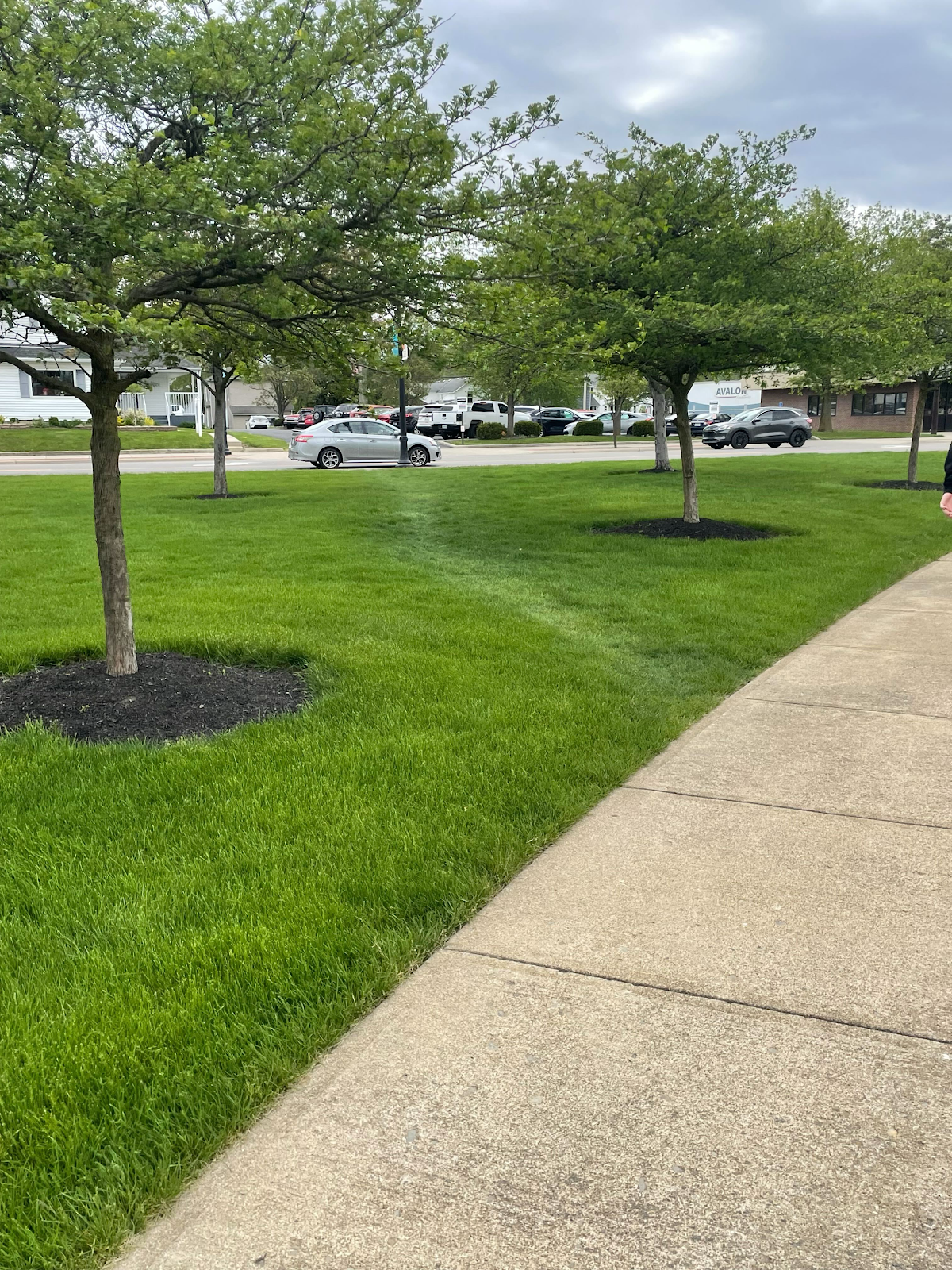
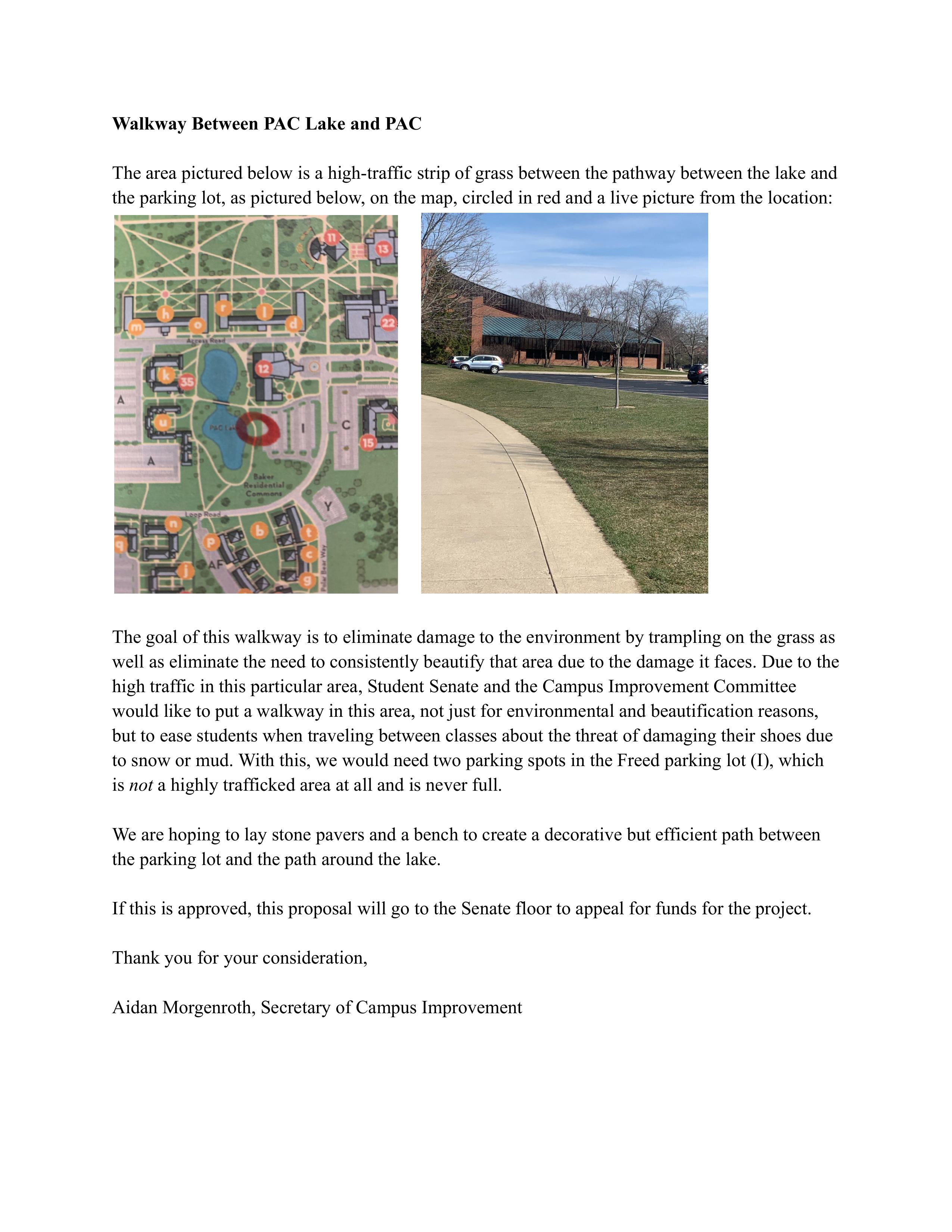
Some desire paths are being forged now on campus, and efforts have been made to try to get these desire paths made into actual paths. One such desire path has been forged between the Freed Center and PAC lake. An effort was pushed by Student Senate Secretary of Campus Improvement, Aidan Morgenroth, to turn this desire path into a functioning walkway for students. “The goal of this walkway is to eliminate damage to the environment by trampling on the grass as well as eliminate the need to consistently beautify that area due to the damage it faces,” the proposal sent to P-Plant states. No such functioning walkway has been installed, but so long as people on campus move, more desire paths will be created, and with them, a potential demand to formalize the paths. As campus changes, with buildings rising and falling, the need of students and faculty to walk around evolves with it.

A desire path being forged between a parking lot off campus connecting to an existing sidewalk near Dicke. (Northern Review/Arin Wade)