

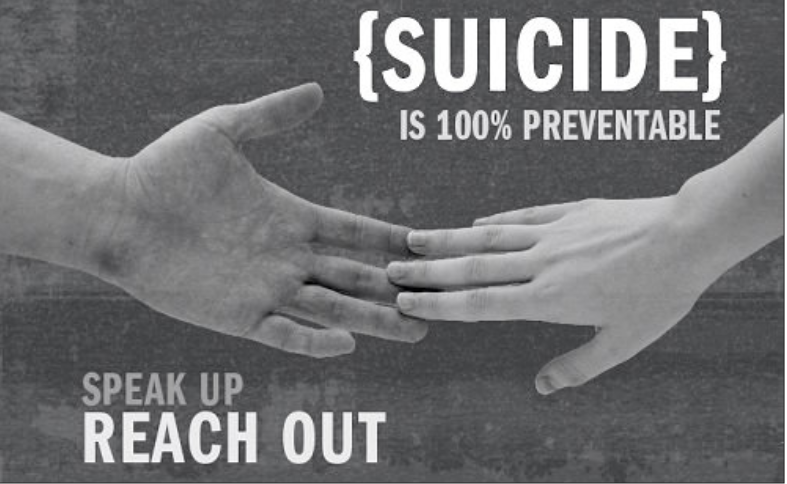
The words “Be ready, Be there” were written across the projection screen as ONU students and staff took their seats for Suicide Awareness Day Thursday, Sept. 10. President of Phi Mu Delta, Andrew Ziegler welcomed the guests and participants of the event. For fraternities such as Phi Mu Delta, the concept of suicide is unfortunately known.
Since the death of ONU student Timothy McMullen two years ago, PMD has gone above and beyond to help the community in various ways, from creating everlasting bonds with brothers, to hosting benefit dinners that commemorate and honor people like Tim. The concept of the Suicide Awareness presentation was pursued by PMD.
Ziegler believed the presentation helped the organization achieve their goals of increasing awareness of suicide.
“The purpose of the topic was achieved with lots of outreach,” Ziegler said.
With the help of Dr. Schafer, director of counseling at ONU, they informed students and staff of various topics related to suicide, such as knowing
the signs, knowing how to help someone struggling with suicide, and explaining that suicide is indeed a subject worth discussion.
The discussion of suicide is a sensitive subject. There is a common fear of saying the wrong thing to someone, worrying about planting the idea in their head or saying the wrong thing and worsening the situation. Due to this fear, many conversations between friends and family are often ignored, but it doesn’t have to be this way. Schafer affirms that discussion is necessary when it comes to these types of situations.
“It is okay to talk about suicide,” he said. “We want people to be comfortable talking about it. By talking and recognizing the symptoms, it is a chance to prevent tragedies.”
But what are the symptoms of suicide? And how can students seek help if they or a friend may have these symptoms?
Compared to the general population, college students are less likely to seek help and instead ignore counseling. Some symptoms that lead to suicide include substance abuse, anxiety, bullying, misconduct, social isolation, and self-injury. These are all factors of suicide, yet another factor looms around the corner: limited access to mental health care. A person may seek mental help and find none within their area. However, at ONU, the resources provided not only include healthcare, but mental healthcare as well.
“There is no limit on the amounts of services at Ohio Northern,” Schafer explained. “We have great treatment in the health center. Remember to be aware of your resources and understand that you are never alone.”
Simple acts of kindness are also some of the easiest ways to include others and eliminate gaps of loneliness.
So what is the best thing to do when you suspect a friend or adult is suicidal? The solution is to simply listen. Listen and observe.
“We can give so much hope by listening the right way,” Schafer said.
Recognize if a person is feeling hopeless, giving away possessions, and writing notes that possibly outline a suicide plan. If any of these factors occur, it’s best to leave personal emotions out and to kindly address the situation.
Negative reactions, false accusations and swearing secrecy to their plans are the worst things one can do. Instead, recommend for them to go to the counseling center; get them involved in campus organizations that will give them social support and friendships within the campus
and in the community. Simply asking the big question is a way to address the situation.
“They’re not going to be offended if they’re not suicidal. It’s better to introduce the topic than to pretend it never exists,” Schafer said.
Suicide is a topic that is sensitive, yet worthy of discussion. By knowing how to listen and recognize the symptoms, anyone can help save a friend or loved one. September is not only a month to recognize suicide within communities and countries, but an opportunity to spread kindness and create friendship. All you have to do is listen and be kind to others. It may just save a life.