

Oscar Wilde was destined to become a passionate artist from an early age. His mother expected him to become an artistic genius, and that wish for her son was certainly fulfilled. Beginning with a career as a poet and journalist, Wilde’s literary fame grew progressively from 1881 until the 1895 premiere of his theatrical masterpiece, The Importance of Being Earnest.
Similar to Wilde’s other theatrical plays, The Importance of Being Earnest makes a mockery of upper-crust society. His sharp wit is showcased through this production.
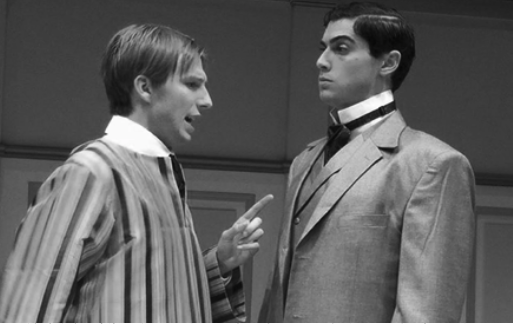
The Ohio Northern University campus community witnessed the creative art of this play with the Department of Theatre Arts’ rendition of Wilde’s famous play for its annual fall drama.
The popular comedy focuses on the story of John Worthing, a carefree young gentleman who invents the fictitious brother Earnest, whose wicked ways allow John to leave his country house and travel to London. That’s where he stays with his close friend, Algernon Moncrieff.
As the play continues, we meet Algernon’s cousin, Gwendolen Fairfax, who falls in love with John. She strongly desires to marry someone with the name of Earnest. Since John’s “brother” uses the name Earnest, the couple falls deeply in love. Returning to a country house he shares with Cecily Wardew and her governess, Miss Prism, John realizes that Algernon has also adopted the identity of Earnest to conquer Cecily’s love. Chaos erupts at the country house when Gwendolen also arrives for a visit.
“I laughed loudly the first time I read the script. It was so rude and witty that I couldn’t contain myself,” says Chase Zimmerman, a senior computer science major who portrayed the role of John Worthing. “Before beginning this show, I had not read any of Oscar Wilde’s works. He has now become one of my favorite playwrights.”
Oscar Wilde’s strong wit and sarcasm are the leading forces of the show. Cast members are looking forward to observing the audience’s reaction to the hilarious comedic situations within the show.
“The amount of mockery that Wilde has to say about the Victorian period is hilarious. Most of the humor is derived from the trivial plight of extremely wealthy families during this time. The absurdities of their everyday lives – serving tea or even sitting down – are mundane and extremely comical,” Zimmerman adds. “I hope the audience opened their hearts to these char- acters and opened their minds to the language of the play. It’s the wittiest piece of work written in the English language.”
The play was led by professional director Happy Anderson, which had resulted in a rewarding experience for cast members with significate impact on their studies as theatre students.
“Not only is Happy an incredible director and teacher, but he also really brought the cast together as an ensemble. His passion and talent show in every- thing he does. This production is truly a gift to actors and audience alike,” says Sarah Keune, a junior musical theatre major who portrayed the intimidating character, Lady Bracknell.
Other members of the show’s cast include Anne Cape as Miss Prism; Regan Frese as Lane/ Merriman; David Grant in an understudy role; Evan LaChance as Rev. Canon Chasuble; Molly Moreau as Cecily Cardew; Patrick Plucinsky as Algernon Moncrieff; and Sydney Walton as Gwendolen Fairfax.
Dramaturg Allie Becker, a junior theatre arts major, states, “We invited people to enter Wilde’s world of propriety, frivolity, and cucumber sandwiches as they enjoyed his most celebrated work.”